The REAL Differences Between Self-Publishing and Traditional Publishing
“Should I self-publish or go the traditional route?” This is one of the weightiest questions a would-be author will ever face. The internet chorus is quick to chime in, and answers are usually strictly partisan: pro self-publishing, or pro traditional publishing, and never any grey area.
I’m here to tell you the real story, which is that there are advantages and disadvantages to both publication routes. How do I know? I’ve done both – I’ve made money at both; I’ve been thrilled by both; I’ve been frustrated by both.
It’s time to examine the REAL differences you’ll face, so that you can make up your own mind whether to self-publish or pursue that traditional deal.
The cost of traditional publishing
Let’s talk money. With a traditional book deal, you’ll pay no money to see your book in print. In fact, most publishers pay the author an advance on royalties, so you get money up front. Broadly, this means the publisher estimates how many copies of your book they think they’ll sell and gives you your cut of those sales early.
An advance can be as little as £500 ($650) or as much as multi millions. It’s essentially a bet by the publisher. And how big they bet depends how strongly commercial a publisher feels that your book is. The really big money usually comes when multiple publishers compete against each other in a bidding war, driving up the advance.
Some smaller publishers operate on a royalties-only basis, which means you don’t get any money up front, but you do start earning money as soon as your book starts selling. (The “advance” part of the equation means that most authors don’t see any additional revenue until years after their book is published, if ever. A dirty little secret of publishing is that most books don’t earn out their advance.)
If traditional authors pay money for things, it will usually be marketing-related, such as author photos, an author website, public speaking training, etc. The core of the publishing process, including editing, formatting and cover design, will be taken care of by the publisher.
The cost of self-publishing
Meanwhile, ALL the cost of self-publishing, also called indie publishing, is borne by the author. Developmental editing, copyediting and proofreading costs can run to thousands. (Not, let’s be clear, because editors are trying to suck money out of authors, but because good editing is time-consuming and therefore expensive.) Many self-publishers will also choose to pay for cover design and book formatting, to ensure a professional-looking end product.
However, it is worth noting that it’s free to get your book up on Amazon and other selected online retailers, so if you’re prepared to do a lot of the work yourself, you can self-publish on a shoestring.
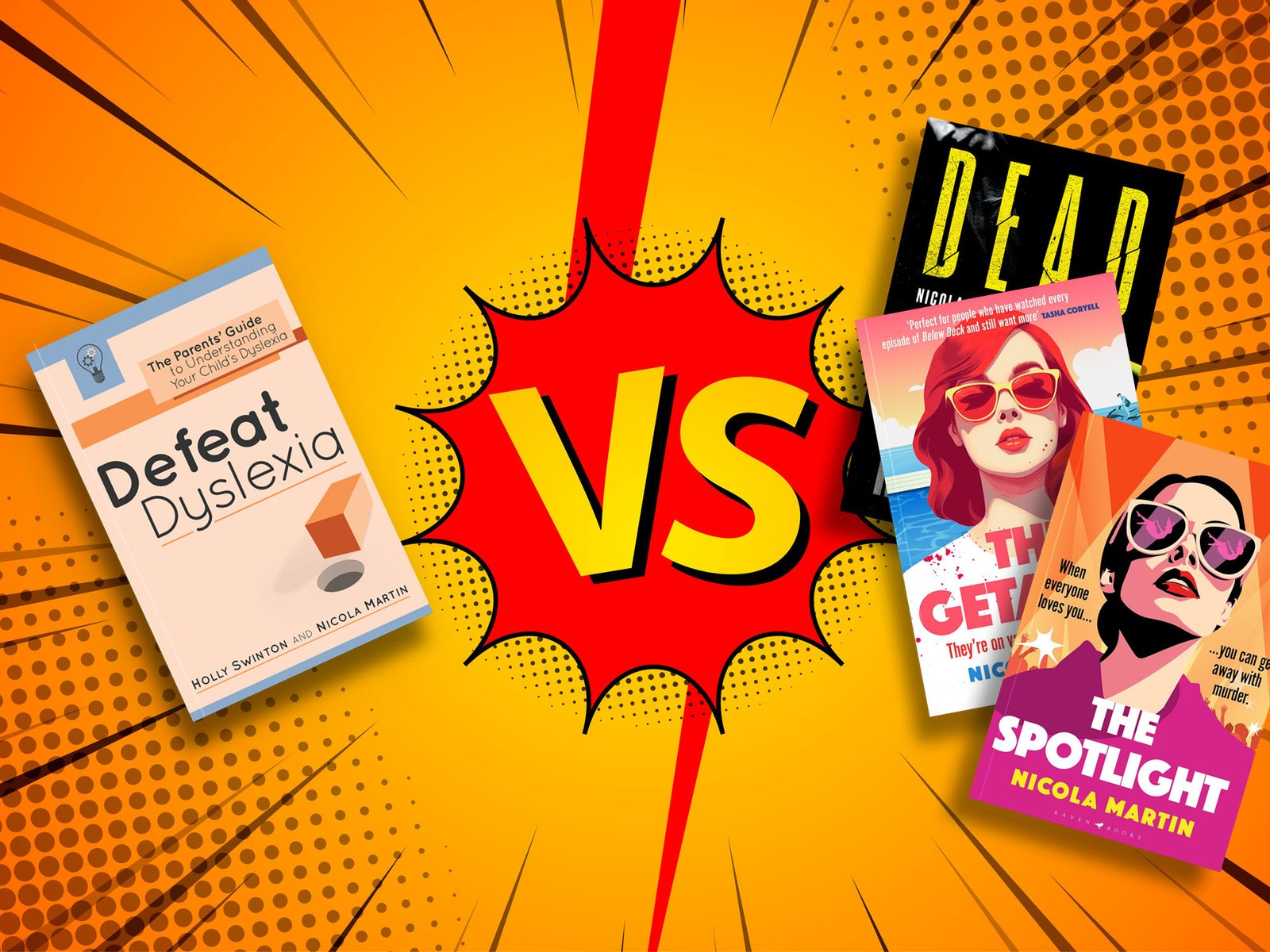
Personally, I was able to self-publish my book, Defeat Dyslexia!, for less than £100 ($130). How? I bartered editing services from a friend of a friend in exchange for work. And my graphic design background meant that I could design the cover myself.
I taught myself ebook formatting using the excellent book, Zen of Ebook Formatting. What I ultimately spent money on was stock photos and proof copies of the paperback edition. Yes, the whole endeavour was cheap, but it took a lot of time and effort.
In short: you CAN self-publish cheaply, but beware of false economies.
I think it’s money well spent to pay for editing (you’ll never get back the respect of a reader who picks up your book and is turned off by slow pacing, inconsistencies, or grammar mistakes). I also wouldn’t recommend designing your book cover yourself unless you have a lot of experience in graphic design.
Earnings from self-published books vs traditionally-published books
My self-published book, Defeat Dyslexia!, has earned a little over £10,000 ($13,000) over the course of the ten years it’s been in print.
Meanwhile, my three traditionally-published novels, Dead Ringer, The Getaway and The Spotlight, have earned me a combined £45,000 ($60,000) pre-tax.
Trying to predict how much money you’ll make from a book, whether self-published or traditionally-published, is a bit of a fool’s errand, so don’t take these figures too literally.
Your experience with publishing could be that you make millions. You might also make nothing. But hopefully these figures demonstrate that there’s money to be made via either route.
The editorial process of self-published books vs traditionally-published books
Perhaps the biggest difference between self-publishing and going the traditional route is the amount of editing. Look at the trad-published books on your shelves. I can promise you, they have all gone through a hell of a lot of editing. Even the bad ones!
For example, my latest traditionally-published novel, The Spotlight, went through three rounds of structural edits, a line edit, a copyedit, and was proofread by multiple people. If I’d been paying all the people involved (including my rockstar main editor, who is genuinely one of the best editors I have encountered), it would have cost me tens of thousands of pounds.
By contrast, as mentioned above, for my self-published book, I bartered for editing services, called in beta-reading favours from friends, and did a lot of self-editing. The end result was adequate, but my book received far less editorial scrutiny.
(In case you’re wondering, there is zero quality filter on uploading your book to Amazon. This means you can, and many people do, go through no editorial process at all when self-publishing.)
I know many people bristle at the idea of being heavily edited. “Good enough is good enough,” you may be thinking, of your lightly-edited book. Or even, “I don’t WANT other people sticking their oar in, telling me what I can and can’t write.”
All I can say is: my traditionally-published novels are so much better as a result of being rigorously edited. Being edited is always a hard process, but I’m so glad I went through those many, many rounds of edits, because the finished book is lightyears better than it would have been without editing.
Editing is a crucial part of publishing and, whether trad-published or indie-published, I recommend doing as much of it as you can bear to do.
Timescales of self-publishing vs traditional publishing
Another huge difference between self-publishing and traditional publishing is the time it takes for your book to hit the shelves.
For me, it took about four months to get my self-published book, Defeat Dyslexia!, ready to go. If you’re more experienced, or less discerning, you could self-publish a book in a weekend.
Meanwhile, it has consistently taken 18 months for my traditionally-published books to land in bookshops.
Eighteen months?!?
Yep, trad publishing is slow, even glacial. There are good reasons for the slowness, however. First of all, there’s the aforementioned editorial process, which can take 6–9 months.
The publisher’s marketing department will also have a pre-publication marketing plan, which involves distributing early copies of the book to both professional reviewers (to get exposure in newspapers and magazines) and influencers (to get exposure on social media). As a reader, I’ve had the experience of feeling like I’ve been hearing about a buzzy book for months only to check the Amazon listing and realise it’s not even out yet!
Finally, there’s the fact that traditional publishing houses aren’t just publishing one book a year; they’re publishing dozens, sometimes hundreds. When you’re traditionally published, you have to come to terms with the fact that your book release date may be moved around to accommodate other authors.
Indie-publishing definitely has speed on its side, and self-published authors can often hit a hot trend right at its peak. For this reason, digital-first publishers (traditional publishing houses that operate more like indie-publishers) have reduced book publication timescales dramatically.
A final word of caution about timescales: as an author, you don’t need to be in as much of a hurry as you think.
Yes, it may have taken you years to write a book. Yes, you may be champing at the bit to get published. But… chill. It really is better to have a great-quality book that’s well packaged than it is to have something out there, with your name on it, which is rushed and sloppy.
Bookshops, libraries and hard copies: traditional vs self-publishing
One of the great joys of my life as an author is being able to go into a library or bookshop and see MY book on the shelf. Wow! Dream come true! Who knows which browsing reader might pick up my book, take it home, and devour it?
Now, when it comes to my self-published book, Defeat Dyslexia!, I have never seen it in a library or bookshop. It actually sells well in paperback from Amazon, but it’s not stocked elsewhere, because no bookshop wants to get stock from Evil Amazon.
If you’re self-published, you’ll be relying mostly on selling books digitally (as ebooks or as paperbacks bought from Amazon). It is possible to get your hard-copy books out there in the physical world, using a distributor like IngramSpark. But it will likely be a case of physically visiting indie bookshops and local libraries, where you will need to personally convince the booksellers/librarians to stock your book.
By contrast, traditional publishers have sales teams to do this, as well as strong links to big retailers. Being trad-published is not a guarantee that your book will be widely stocked, especially since most new releases are on the shelf for a month or two and, if they don’t sell, they’re returned to the publisher. However, there’s also a chance your book will take off and be stocked in bookshops for years to come.
Print quality of traditionally-published books vs self-published books
A short, nerdy detour into print quality, which 99% of book readers will not notice or care about:
If you self-publish, you will likely produce a print-on-demand (POD) paperback, which as the name implies, means that a paperback of your book will be printed only when someone clicks Buy.
A traditionally-published book, by contrast, is likely to be part of a large print run, produced at a dedicated book-printing facility and stored in a warehouse ready to be shipped out to booksellers. (I say “likely”, because some trad publishers do actually use print-on-demand technology instead.)
The main difference between POD paperbacks and traditional paperbacks is, forgive the technical term, a certain “floppiness”. The binding is not as secure on POD paperbacks and the cover may begin to curl easily. The paper quality may also be lesser, meaning you can hold a page up to the light and see what’s printed on the other side of the page.
I mention this because some indie publishers become really obsessed with print quality. They try different distributors (IngramSpark is apparently better, quality-wise, than KDP Print), they even go to the expense of paying a printworks for a short-run print.
I understand why this obsession can claim certain authors. I’ll say it flat out: my traditionally-published books are nicer than my self-published one. More tactile, higher quality print.
But, truly, how many readers are going to notice the difference? Very few, I’d wager.
Prestige in traditionally-published books vs self-published books
Paper quality is something you can examine and analyse. Our next difference between indie publishing and traditional publishing is much harder to quantify: prestige.
By “prestige”, I mean, how impressive it is to have a book traditionally published. And it is impressive. It’s hard to secure a traditional publishing deal. It means your book has been read, liked, and externally validated by a whole raft of experts in the field of publishing.
If you’re lucky (I was), your book may go on to reap more external validation. My first novel won a prestigious award. It was favourably reviewed in a national newspaper. Prestige!
If you’re chasing prestige and external validation, you won’t get it from self-publishing. Amazon doesn’t care what you upload; they don’t have any quality standards. My self-published book never won an award or got any fancy newspaper reviews.
Self-publishing is still (unfortunately) looked down upon, so indie-published books are rarely considered for awards or reviewed in newspapers/magazines.
Yes, you’ll be able to say “I wrote a book! You can buy it!” and that should be a source of pride for you, but you may struggle to cling to your sense of pride when people are snooty about self-publishing, or you get your first one-star review, or you don’t make any sales at all this month.
To be clear, I don’t think wanting/needing external validation from a traditional publishing process is healthy. But I have known an awful lot of authors who don’t just want to be published – they want to be fêted. And you’ll have a better shot at that with a traditional publishing deal.
The true silver bullet of self-publishing: control
I generally think of self-publishing as a bargain. You give up certain things (prestige, money upfront) and in exchange you get a bright, gleaming bauble called control.
Of course, you have control over how much editorial work you do and which changes to institute. But you also have control over pricing, packaging, marketing.
Don’t think your cover design is working? Change it! Think your ebook pricing is too high? Change it! Not making enough sales? Do some more marketing!
Meanwhile, traditionally published authors have little control over many aspects of their book. “You either love your cover design or you tolerate it,” is a common lament among traditional authors. (No, an author is not typically consulted in the cover design process.)
In some ways, I’ve enjoyed not having responsibility for packaging and marketing my traditionally-published books, but in others ways, it’s frustrating to sit on the sidelines and let other people make decisions about YOUR book.
How much marketing do self-published and traditionally-published authors do?
When people talk to me about self-publishing versus traditional publishing, the first word out of my mouth is always: marketing.
Ironically, I think many would-be authors think about marketing last. Indeed, that’s why I’ve left it to last on this list.
Not to spotlight the obvious, but when you self-publish, you are completely and totally responsible for marketing your book. No one will find your book on Amazon of their own accord. You need to direct them there.
In my experience, as someone who’s worked in marketing for 20 years, authors drastically underestimate how difficult and time-consuming it is to market a book. Marketing is a job. A skilled job. There are people who just do social media marketing, full time, 9–5, and get paid a handsome salary to do so.
Don’t make the mistake of thinking that marketing your book is something you can do in 10 minutes at the end of the day.
The reason I chose to go the traditional route with my crime novels is because I wanted the muscle of a publisher’s marketing department behind me. Most traditional publishers have links with big retailers; they’re known by newspapers and magazines, and therefore their books are more likely to receive professional reviews. Publishers are (usually) ready, willing and able to spend money on advance reader copies (ARCs) to create social media buzz, magic up ad campaigns, and market your book in a range of ways that have never occurred to you.
I don’t want to sound all doom and gloom about marketing. It is possible to make a marketing splash with an indie-published book, and many authors find they enjoy many aspects of marketing, like blogging, writing newsletters, appearing on podcasts, and making BookTok videos.
However, when choosing to self-publish, you should allocate a budget for things like website marketing and ad campaigns. In fact, if you’re looking for author website packages, check out my services.
The final verdict on self-publishing vs. traditional publishing
For me, personally, would I self-publish another book? Yes.
Would I sign another traditional publishing contract? Also yes.
I have had good experiences with both indie publishing and traditionally publishing. I’d do both again.
I do not think that one is “better” than the other. Both come with compromises, but you can find huge success in both arenas.
Perhaps, after reading this article, you already know which direction to take. But, if you’re still on the fence, I’d say try traditional first. Self-publishing will always be an option, but once you’ve indie-published a book, no publishers will be interested in taking it on. (Unless, that is, your book is a juggernaut hit, in which case, why not keep self-publishing and continue raking in the money?)
I do find that many aspiring authors count themselves out too easily. They look at the hoops you need to jump through to find a literary agent and a publisher and they say, “nope, too hard, I’m not good enough.” You are good enough, even though the world of publishing can be a harsh one.
Ultimately, being fearful of rejection from the trad publishing world is not a good reason to self-publish. Only self-publish if you genuinely believe there’s a business case for your book and you are the one who can do the work to make it happen.





A great post, thank you for sharing 🙂
I have self-published 8 books, with number nine on the way – and would not now wish to be traditionally published. I really like to have control over my work. And I do rather enjoy the marketing side of things, although I do have a sales and marketing background, albeit not in books.